compatibility
- macos 11+ / windows 10+ (64-bit)
- au / vst3
- no sampler required

a ray through time
luch is based on a soviet-era children’s metallophone, recorded through two vintage oktava microphones and hardware from the same era. the result is uneven, simple, slightly fragile, and unpolished. it feels less like a reconstruction and more like something carried forward through time.
play it as a quiet metallophone, let it take on the dreamy aged tone of a wire recorder, or blend it into slow, unstable textures from two distinctive synthesizers.
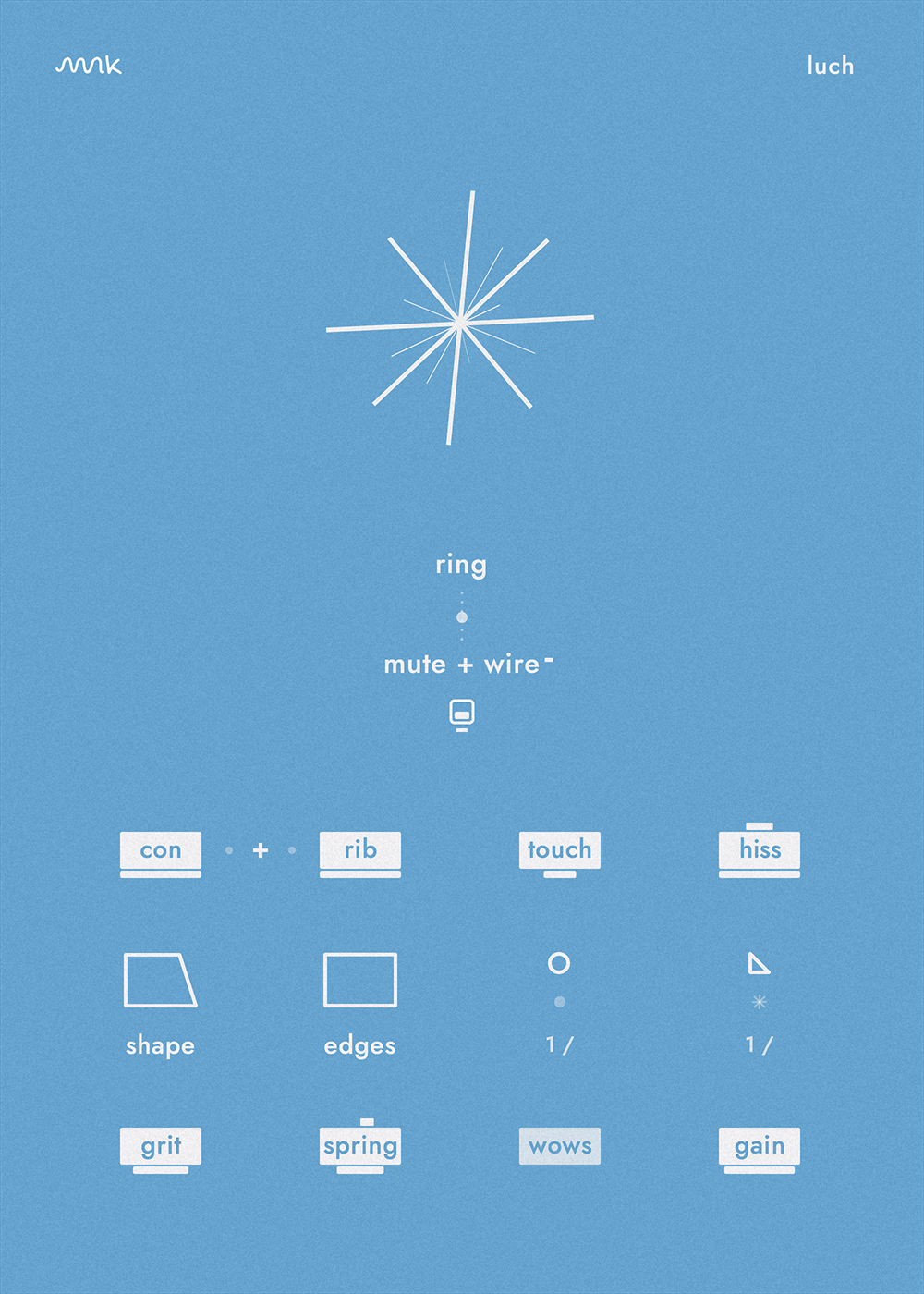
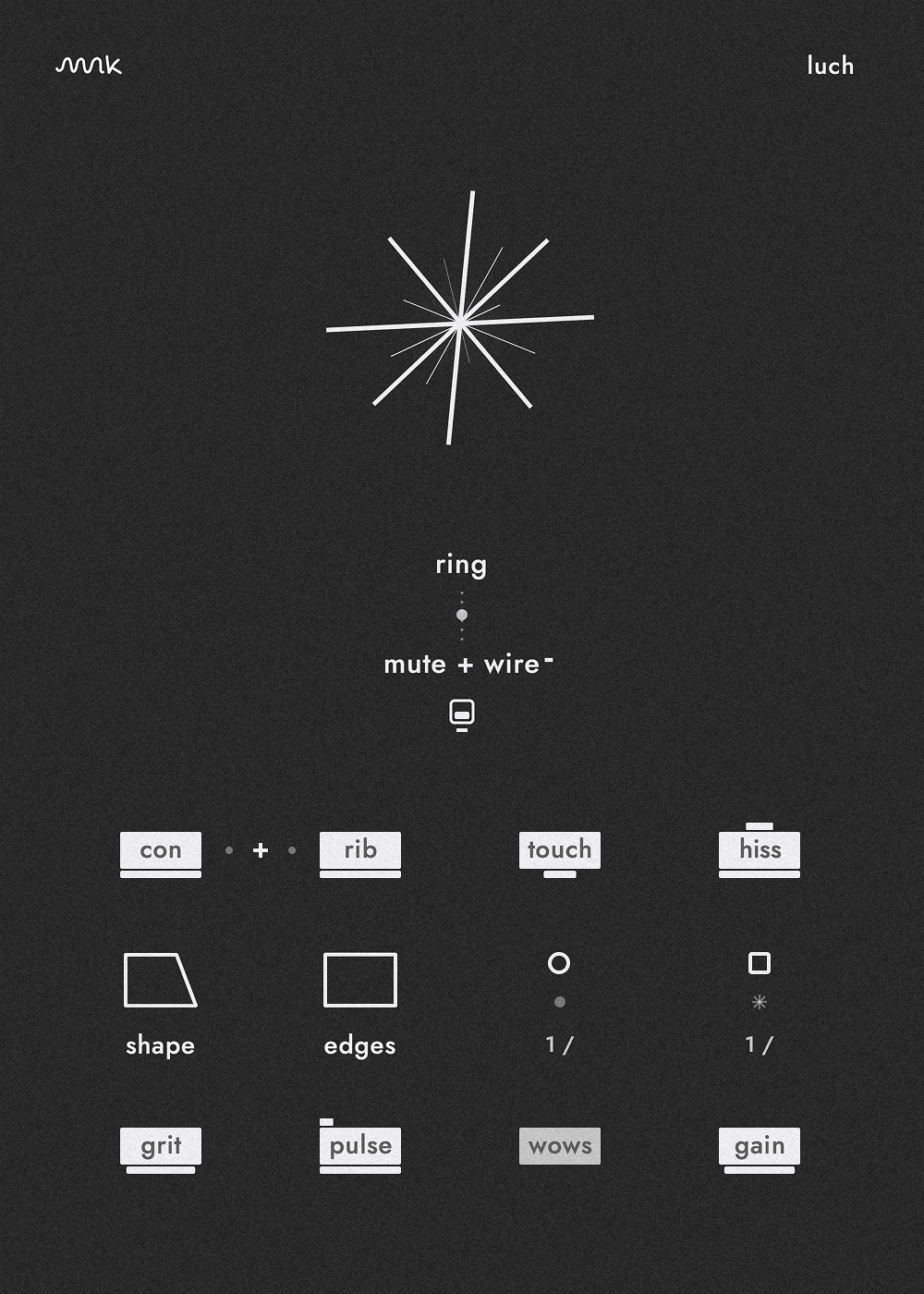
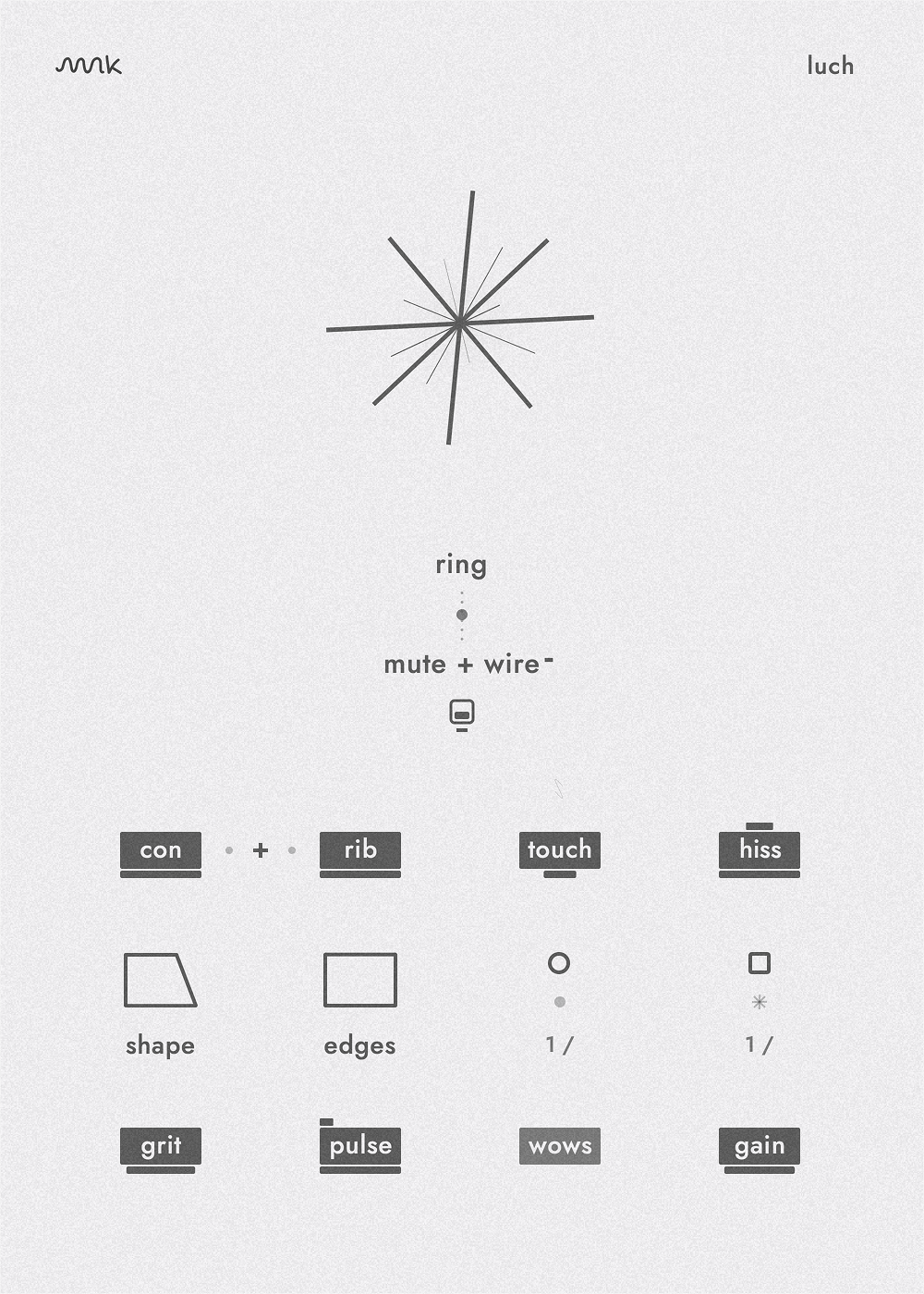
hover over the interface for tooltipstap the interface for tooltips. swipe to switch color themes
the interface is built around two main blends. mute and ring set the acoustic character. each can stay clean, take on wire-recorder tone, or switch to recorded free-rhythm takes.
the central ray-shaped slider blends the acoustic layer with its paired synth texture. two tempo-synced lfos can move both blends over time.
the other controls shape the details: attack, filtering, saturation, space, and subtle pitch drift. the mic section switches between mid-side width and centered mono, while touch and noise add extra physical detail.
recorded with two vintage oktava microphones: a 1972 ml-16 ribbon for the side signal, and a 1975 mk-13m condenser for the center. the ml-16 gives a softer tone, while the mk-13m brings a clearer, brighter center. either microphone can be used alone, or opened into a wider mid-side image.
ritm-2 provides steadier mono tones, while elektronika em-04 was recorded as moving string textures with pitch, filter, and level changes played by hand.
the main mute and ring samples were passed through the mn-61 wire recorder to capture its aged tone. in wire mode, the metallophone takes on that rougher, time-worn tone.
the starting point was a rare soviet children’s metallophone found at a flea market. every note was recorded carefully, not only for pitch and dynamics, but for the feeling of time inside the sound.
15 notes were captured in several articulations: ring for sustained open notes, mute for notes damped with masking tape, and ring chaos / mute chaos for free-rhythm takes recorded on each note.
the clean recordings were shaped through vintage channel strips: preamp, eq, and compression stages.
tick, hiss, crack, and touch were recorded as physical details around the instrument: an old clock with an uneven tick, the mn-61 wire recorder, and soft mallet hits on a taped plate.
*the windows installer is unsigned, so if smartscreen blocks it, click [more info] and then [run anyway].
enter your email to receive the download link.
email confirmation required. occasional product updates, unsubscribe anytime.